
All:
Happy November – a month to celebrate Veterans, prepping for winter, and Thanksgiving. And of course, holding elections. I am glad that I will continue serving the residents of Cambridge next term, and look forward to working with new councillors Ayah Al-Zubi and Tim Flaherty. I will miss the counsel and wisdom of Ayesha Wilson and Paul Toner. I was also happy to see our city will have a new charter, with over 70% of the voters approving the change. For those who need a refresher, I wrote a letter to the state legislature as part of a policy order advocating for the new charter document and outlined some of the changes. Our charter had not been changed in 80 years before this election! The new charter is a modern and clear plain-language document that expands review and democratic accountability measures within our government, standardizes best practices including on budget review, and sets up a process by which we can further refine the charter in future years. I am excited to implement the new charter and continue to work to improve the accessibility and transparency of government.
I was moved to participate in a discussion recently with Rep. Katherine Clark and the Cambridge Economic Opportunity Center – and some of my colleagues to hear from people most directly affected by the government decisions related to the shutdown and cutting off aid to needy residents. While the shutdown is over, it should never have happened, and the uncertainty around funding for food programs was shameful. We will have to continue to deal with the fallout from the cuts to the social safety net by the federal government. Just this week the Council and the City Manager discussed the potential loss of over $8 million of housing grants for programs that move homeless individuals and families into housing and help to keep them there. This is stunning news that we will need to work to deal with over the next budget cycle and into next year.
The 2025 edition of the Greater Boston Housing Report Card came out last week. I appreciate this report every year and it helps me as I consider local and regional housing issues and provides important context. It is worth a read for anyone interested in housing, but the key findings from this year’s report include: housing construction in the last five years is strong, but there are concerns about building permit numbers, which is something we see slowing in Cambridge as well; affordability is still a large concern; and it is still too soon to tell if large state-level efforts like the MBTA Communities Act will have a meaningful impact on multifamily housing construction.
After working for many months with City staff and local residents, DHSP has launched a pilot program with the Council on Aging to expand programming to the Russell Youth and Community Center. The Community Center is a great city resource and I’m happy to see it being utilized by residents of all ages.
This month is time to rake for those who have any yards – and remember to leave some of the leaves for the benefit of our urban ecosystem as natural leaf beds provide an important environment for native bugs and pollinators of all kinds. It’s also a good time to sign up to be a Storm Steward and adopt-a-drain near you. If you see drains clogged with leaves or debris, please do your part to unclog and dispose of properly in bags for pickup by our fabulous yard waste crew.
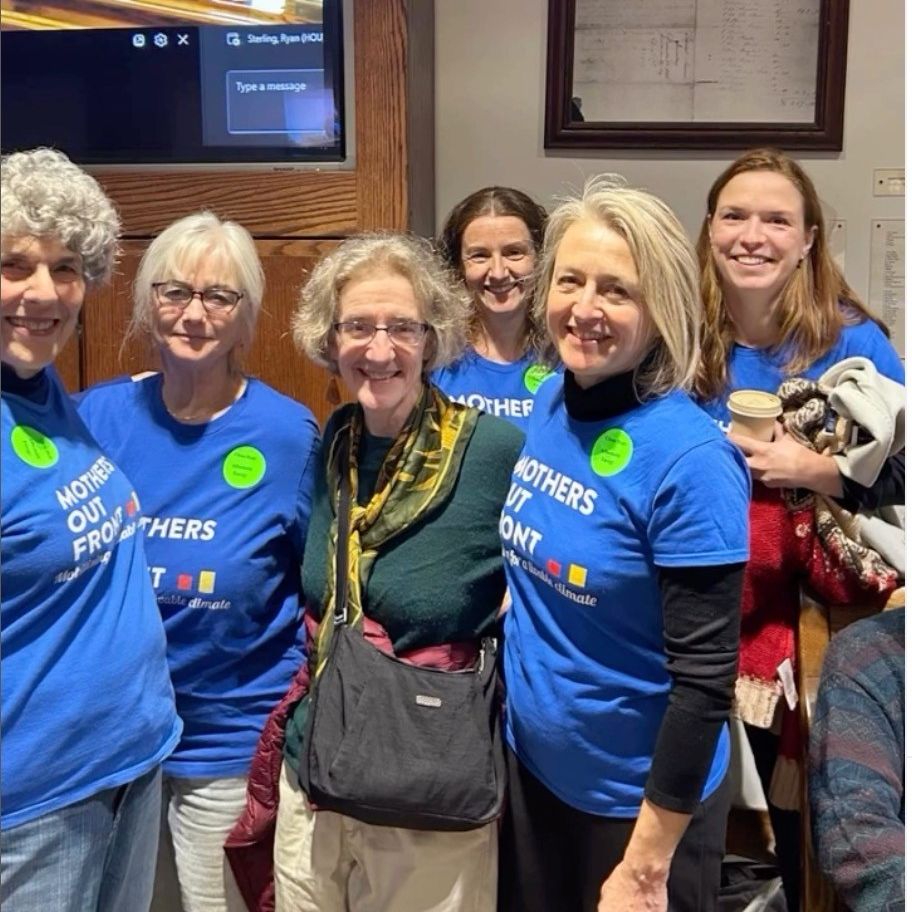
And finally last week I was at the statehouse with some climate activists to push the legislature to hold firm on our state’s climate agenda. More on that below.
I am at a National League of Cities Conference, and am learning about a range of ways other cities are tackling common problems. I look forward to bringing back some ideas, lessons, and hopefully actions we can take. And it is always reaffirming to see how much Cambridge is doing, and what other cities can learn from us. The spirit here is one of collaboration and support.
Please note there won’t be a newsletter next week, so I’m wishing you all a Happy Thanksgiving today. Additionally, the regular council meeting on December 1 has been cancelled. Look for more updates later in December.
Below are comments on a few top line items and a few quick notes from Monday’s meeting. If you have questions or comments on these or anything else, please feel free to reach out at any time.
Patty
Council Updates
Health and Environment Committee Updates
Joint Housing / H&Env on Solar Energy Systems: Thursday, December 11, 3:00pm-5:00pm
- (meeting materials, when available)
- After some pushback from the rest of the Council on my proposal to protect existing solar energy systems, this proposal was sent back to committee for more deliberation. This meeting, a joint meeting of the Housing Committee and the Health and Environment Committee will continue to try to come to a compromise in order to protect residential solar panels.
Finance Committee Updates
Joint Housing / Finance on Incentive Zoning: Wednesday: December 3, 3:00pm-5:00pm
- (meeting materials, when available)
- The Housing Committee and the Finance Committee will hold a joint public hearing to discuss the feasibility and potential impacts of implementing residential development incentives – such as tax incentives, public equity financing, and reduced fees and requirements – on housing production and city finances.
Mass Ave and Cambridge St Zoning
I have gotten a number of emails related to Mass Ave and Cambridge Street zoning petitions. I wanted to include my response here so that everyone had an opportunity to see where I land on each of the proposals. There is also a bit of misinformation in the community about what is actually in each of the proposals, so I include a quick summary as well. I encourage you to read, and I’m happy to answer any questions.
I agree with much of the planning board’s assessment on both petitions. I think the heights are definitely a big change on a lot of both corridors, but are good incentives to building housing along transportation corridors, and especially on the Mass Ave petition. I think the definitions of active uses are good, but I don’t know how or if we can further refine that to incentivize local businesses. I think the stepbacks are good on both petitions – both will allow for a better streetscape, in line with the design standards and design guidelines, as well as a step-down to neighboring residential areas. It will allow for more street separation, improving walkability of both corridors, improving the health of street trees with more sunlight, and breaking up the streetscape. I had encouraged City staff to include stepbacks for all those reasons and I am glad to see each petition includes them.
I am slightly concerned with the ratios of heights to AHO allowances. Instead of raising the upper-most height limit on Mass Ave to 12 stories, I think it makes sense to reduce the upper height limit to 11 stories to defer to already existing AHO zoning, which allows 13 stories on corridors. The stepbacks required by the Mass Ave zoning will still give AHO development some advantages as well, but I am concerned it won’t be enough on Mass Ave. Cambridge Street still has a clear advantage for AHO, which is important to maintain. I also have some concerns about displacement of local businesses, especially on the Cambridge Street side. I know we are heavily incentivizing active ground floor retail, which will give those businesses more rental retail opportunities, but I want to continue to pursue all other options to help the potential risk that redevelopment raises for local businesses. We discussed some of this in the most recent Ordinance Committee meeting, but will need to do more work to consider options.
My most significant concern is with the minimal open space in these petitions and the prospect of continuous building facades without open space. I appreciated the planning board’s suggestion of perhaps including open space requirements based on the length of the frontage, to incentivize breaking up street facades, which is also a design standard goal within both MAPS and the Our Cambridge Street Study. We should be looking to existing parts of Cambridge for examples of courtyards, extended sidewalks for extra tree cover, plazas, and even pocket parks. I think all of these are included in our design guidelines documents, but I don’t see the incentives in the actual zoning for open space to break up the streetscapes. And I’m very concerned that without adequate incentives for that open space and streetscape design, that once parcels are redeveloped, we will lose that opportunity for open space for decades – there’s no way to restore open space once buildings are built, so I am concerned about losing it and not protecting it now, because there are extensive benefits for open space options along both corridors: cool and inviting areas for people to sit (including new residents who will live in these buildings), canopy space to reduce heat island impact, permeability benefits. The Mass Ave petition requires no open space below 8 stories, and the Cambridge Street petition requires no open space below 6 stories. All buildings will still need to comply with the Green Factor requirements of existing zoning, which may mean open space opportunities, but I am not convinced that developers will find ways around providing permeable, green open space. The design standards and guidelines as well as the envision goals and the working groups all pointed to the benefits of extended plazas, courtyards, and open space, but I’m not seeing that intention in the zoning. I am interested in looking more into the Planning Board suggestion of including open space requirements that take into account street frontage instead of simply height.
I think we are close on both of these petitions and there is a lot of good here. But I also think there is still a lot of unknown in terms of expected results. I am concerned about the results of very limited open space requirements and I’m concerned about incentives for AHO corridor development and even the future prospect of social housing development, which we are starting to dig into. I am glad the Council agreed that we need to continue this conversation, which we will do on December 2 at 5:30pm, and continue to do public outreach, and the people who engaged in the MAPS and Our Cambridge Street processes in good faith also deserve the benefit of the Council’s extended process. I’m committed to continuing this discussion and I believe in the vision of both the MAPS process and the Our Cambridge Street study, and I want to make sure that both these petitions reflect the vision of an inviting, vibrant, walkable corridor with more housing options.
Climate Rollback in Massachusetts
Last week I filed a policy order taking a stand against a Massachusetts House bill that would have dangerously set back the state’s and our city’s progress on climate mitigation. This bill was eventually successfully halted, in large part due to incredible advocacy by climate advocates all over the state including Mothers Out Front, the Sierra Club, and many others, but the efforts will likely continue in the future. The bill would have had significant impacts on sustainable construction in Cambridge and would have resulted in dropping state commitments to reduce carbon emissions and gutting investment in clean energy infrastructure, risking progress towards decarbonization and putting hundreds of thousands of residents at economic risk, including eliminating utility bill subsidies for moderate income residents. I am proud of the work by advocates to push back on this bill and was inspired to stand with them at the state house last week. It is more important than ever to remain vigilant against attacks on our efforts to combat the climate crisis.
Local Events/Notes
Lecture: The Making of a Revolutionary Feminism in El Salvador
The Cambridge/Somerville El Salvador Sister City Committee and Cambridge Women’s Commission invite you to a talk with UMass professor Diana Sierra Becerra on the publication of her book, The Making of a Revolutionary Feminism in El Salvador. Becerra will be in conversation with City Life/Vida Urbana community youth organizer Kim Landaverde, and Brinton Lykes, professor emerita at Boston College and co-director of the Center for Human Rights and International Justice. Sunday December 14, 1-3 PM, Cambridge Main Library, 449 Broadway, Cambridge. UMass history and gender professor Diana Sierra Becerra, a former undocumented immigrant, has written a history of how women in El Salvador shaped the theory and practice of the revolutionary Left. She encourages her students to approach history as a tool to address current-day injustices. Free and Open to the Public. Books will be available. For more information, email cambridgeelsalvador@gmail.com.
SNAP Recipient Grocery Store Gift Card Distribution Events
The City is partnering with Cambridge Economic Opportunity Committee to fund and distribute $50 grocery store gift cards to Cambridge residents who are current SNAP recipients and who meet one or more of the following criteria: 1) they are an older adult (age 60 or older) 2) they have a disability 3) their family includes a child ages 18 or younger who attends Cambridge Public Schools, a Cambridge Charter School, Cambridge Preschool Program, or a younger child. Gift cards will also be distributed to older adults and people with disabilities who live in Cambridge Housing Authority, Homeowner’s Rehab, Inc, and Just-A-Start housing developments. Distribution dates will be announced by individual buildings. If you are a current SNAP recipient with a child and your child does not attend a preschool that is part of CPP or your child is not old enough for preschool, please contact Cynthia Woodward at the Center for Families: cwoodward@cambridgema.gov / 617-349-6327. Residents will be asked to show their EBT card at distribution events in order to receive a gift card. For more information and FAQs, visit www.cambridgema.gov/SNAPFunding.
Winter Warming Center
The Winter Warming Center Will Operate Monday, December 1 through Thursday, April 30. The Winter Warming Center is a welcoming drop-in center where unsheltered adults can spend the night and be safe from the environmental hazards of the street during the winter months. The Winter Warming Center is located in the basement of the Cambridge Senior Center (806 Massachusetts Ave.) and guests use the entrance on Green Street to access the building. During the 2024-2025 winter season, the Winter Warming center will be open Monday, December 1 through Thursday, April 30 every day of the week from 7:00pm to 7:00am. In addition to a safe space, guests have access to beverages and a meal, bathrooms, and the ability to rest on a mat on the floor. The maximum number of individuals allowed at a time will be 35 people. The Winter Warming Center is staffed by Bay Cove Human Services. For more information, visit www.cambridgema.gov/WinterWarmingCenter.
Participatory Budgeting
The twelfth PB cycle has started, and the City wants to hear your ideas for projects! How would you spend $1 million to improve our community? City of Cambridge Participatory Budgeting
Home Energy Assistance Program
Home Energy Assistance Program to accept applications beginning October 1. The Home Energy Assistance Program (HEAP), formerly called the Fuel Assistance Program) helps income-eligible Cambridge and Somerville residents pay their winter heating bills between November 1 and April 30. Applications for the 2025-2026 heating season will be accepted beginning October 1. For information on how to apply, visit www.cambridgema.gov/HeatingHelp
Thank You
Thank you to everyone for reading. If there are any topics you want me to cover in future newsletters, I’m always happy for the input! As always, please feel free to reach out to my aide, Patrick (phayes@cambridgema.gov), or me for any of your City Council needs.
You can find all previous newsletters on my website. Please share with anyone you think would be interested: https://pattynolan.org/news/